Why schools need a single source of truth
When student, staff and finance information lives in separate systems and spreadsheets, everyday tasks turn into time-consuming workarounds. Teams end up chasing updates, re-entering data, and debating which report is correct.
A single source of truth brings the most important operational data together so everyone works from the same, current information. The result is fewer errors, faster workflows, and clearer accountability across the school.
What a single platform changes day to day
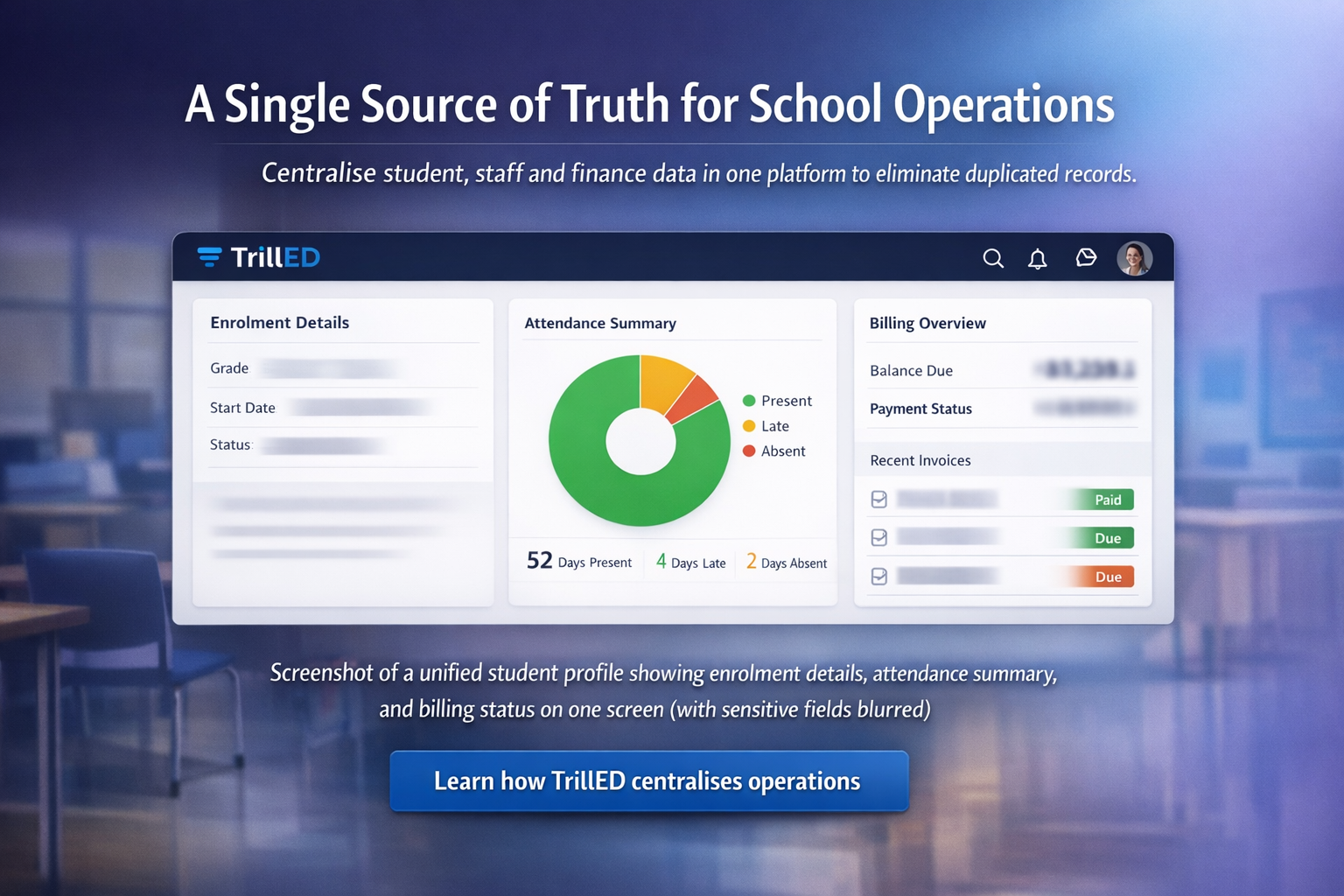
The goal is to centralise student staff and finance data in one platform so core processes run consistently from enrolment through to payroll and billing.
- Admissions and enrolment: capture student details once and reuse them across communications, class allocation, billing and compliance records.
- Attendance and safeguarding: reduce delays by ensuring attendance, notes and actions are logged against the same student profile.
- HR and staffing: keep staff records, roles, schedules and leave aligned with operational planning and reporting.
- Fees and finance: link invoices, payments and concessions to accurate student and family data.
Eliminate duplicated records and manual reconciliations
Disconnected tools often create duplicated records: a student appears under slightly different names, a parent email is updated in one place but not another, or a staff role changes without reaching payroll. Over time, teams rely on manual reconciliations between exports to correct errors.
With a single source of truth, updates happen once and flow through relevant workflows, helping you eliminate manual reconciliations and duplicated records. This reduces avoidable follow-ups such as correcting invoices, reissuing letters, or rechecking compliance documents.
Practical controls that keep data clean
- Defined ownership: assign who can create, edit and approve changes for key fields (e.g., legal name, payer, staff contract status).
- Standardised data entry: use consistent picklists and required fields to prevent gaps and inconsistent formats.
- Audit-ready history: track when changes were made and by whom, especially for sensitive student and finance records.
- Clear handovers: ensure admissions, year level teams and finance share the same record rather than maintaining parallel lists.
Use real time dashboards for faster decision making
When data is centralised and current, real time dashboards for faster decision making become possible. Instead of waiting for end-of-week reports or reconciling multiple exports, leaders can view operational health at a glance and act quickly.
Examples of decisions supported by real-time visibility include monitoring attendance trends, reviewing fee collection status, checking staffing coverage, and validating enrolment numbers for planning.
How to get started without disrupting the school
- Map critical workflows: document how data currently moves between teams for enrolment, attendance, HR and billing.
- Agree on “system of record” fields: define which platform owns key identifiers and contact details to avoid conflicts.
- Clean and migrate in phases: prioritise high-impact datasets first (student profiles, contacts, billing relationships, staff records).
- Train by role: tailor guidance so each team knows what they’re responsible for and what they can trust.
Ready to simplify operations? Choose a school management approach that centralises student, staff and finance data in one platform, helps eliminate manual reconciliations and duplicated records, and delivers real time dashboards for faster decision making. Book a walkthrough to see how a single source of truth can reduce admin load and improve clarity across your school.